
East Orange, NJ
Tap Water Quality Report
A residential neighborhood streetscape in East Orange

The Verdict
East Orange's drinking water receives a C- (Fair) grade. Heavy metal levels including lead, arsenic, and chromium are present, but they remain within EPA standards.
Disclaimer: The Town Water Check grading system is our opinion, based on measured contaminant levels as well as the known effects on long-term human health. Others may reach a different conclusion. This report was published in 2025 and is primarily based on 2024 data. For the most current information, please consult your water provider or municipality.
Summary
East Orange is a city in Essex County, New Jersey, with a population of approximately 69,000 residents. Located adjacent to Newark and Orange, East Orange sources its water from 18 groundwater wells tapping the Passaic Aquifer, providing a local and independent water supply system.
The water system demonstrates acceptable performance in controlling heavy metals and biological contaminants. However, significantly elevated PFOA levels remain a major concern as they exceed future EPA health advisory limits.
Good News
All levels of biological and radiological contaminants, pesticides and left-over disinfecting products were either undetectable or well within EPA limits.
Without water, life is not possible. It's needed for transporting and dissolving nutrients, maintaining body temperature as well as our very shape. In fact, humans are about 60% water. Drinking quality water is as important for good health and longevity as eating well and exercising.
Heavy Metals
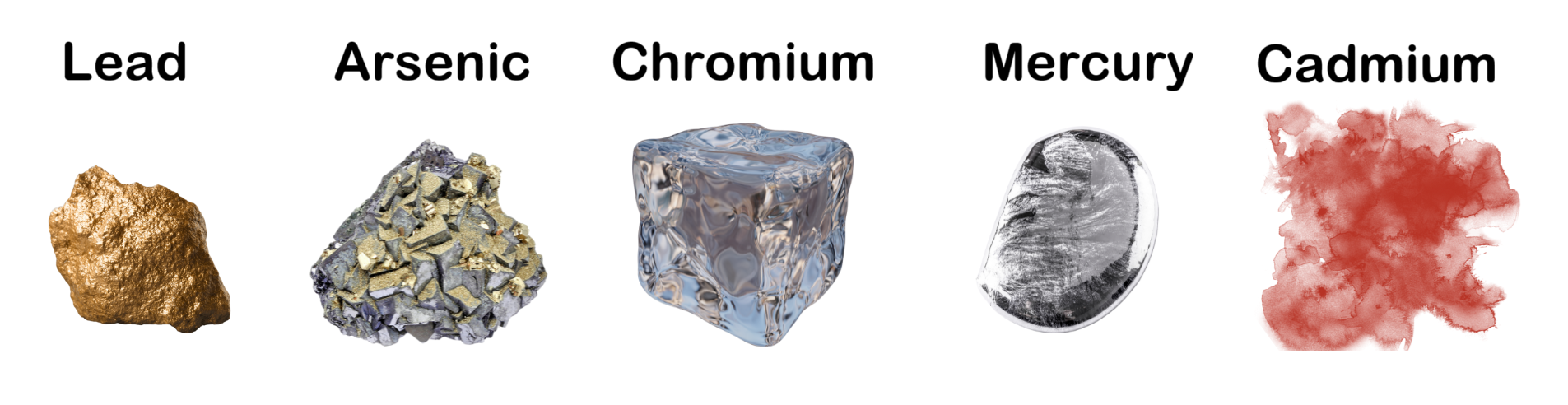
Heavy metals are naturally occurring elements that have a high atomic weight and density. While some are essential nutrients in small amounts, others can be toxic even at low concentrations. The EPA sets Maximum Contaminant Levels (MCLs) for heavy metals in drinking water to protect public health.
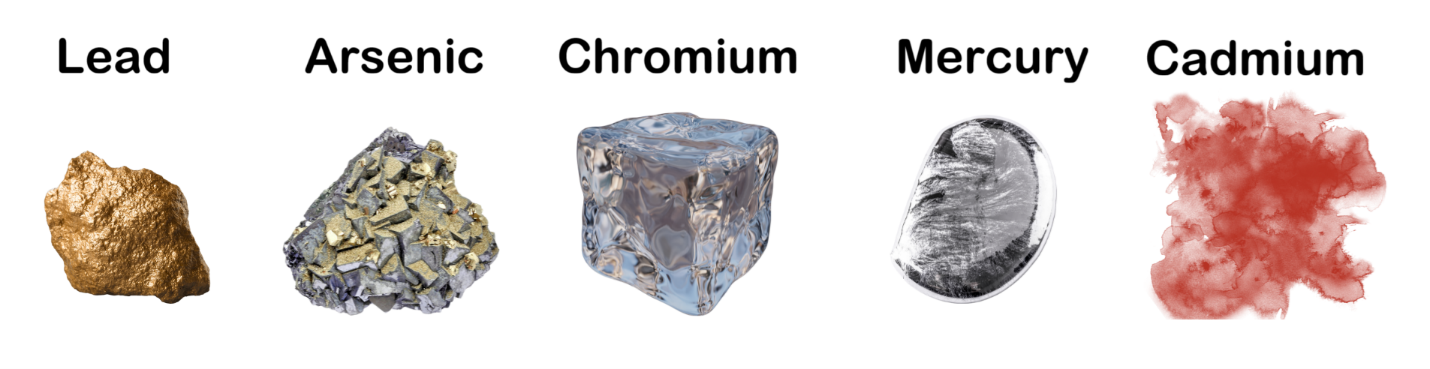
East Orange Heavy Metals Results:
Mercury and Cadmium: Undetected
Lead: Detected at 13% of EPA limit (2.0 ppb vs. 15 ppb action level)
Arsenic: Detected at 6.5% of EPA limit
Chromium: Detected at 1.6% of EPA limit
All heavy metals are within EPA safety standards. However, the goal for lead and arsenic is always zero, as even low levels can have cumulative health effects over time.
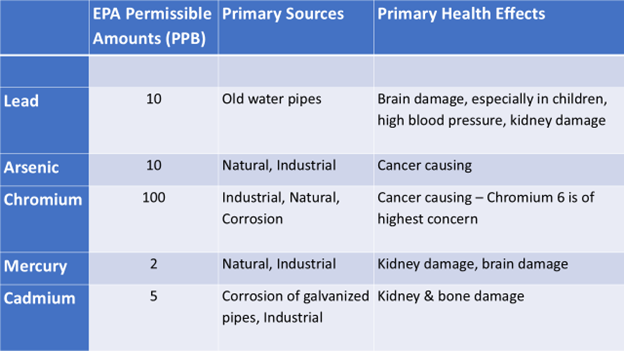
EPA limits and primary health effects for heavy metals
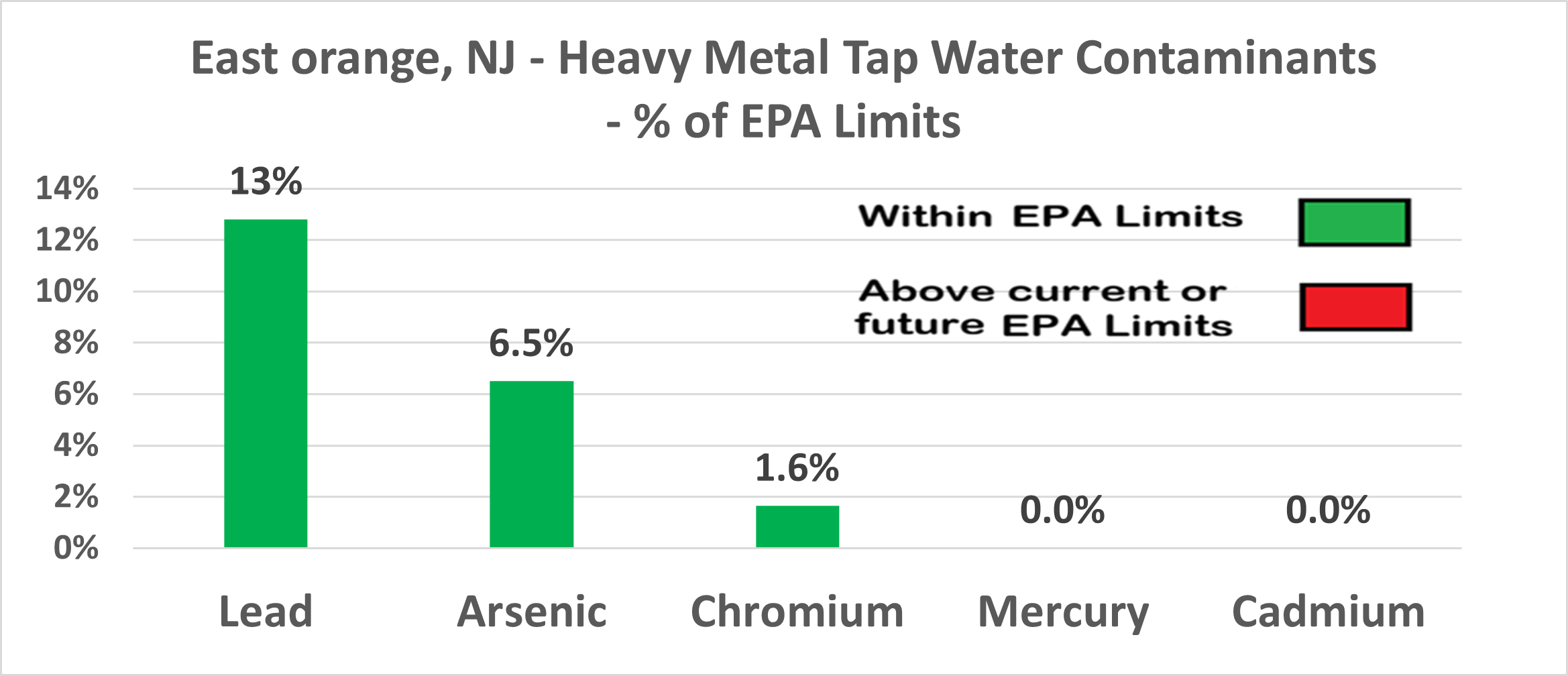
East Orange heavy metals levels relative to EPA limits - all within safe ranges
PFAS (Forever Chemicals)
PFAS (Per- and Polyfluoroalkyl Substances) are a group of man-made chemicals created in the 1930s by bonding Carbon and Fluorine atoms. This bond is one of the strongest in chemistry, making PFAS extremely persistent in the environment and the human body - hence the name "forever chemicals." PFAS have been used in countless products including non-stick cookware, water- repellent clothing, stain-resistant fabrics, food packaging, and firefighting foams.

PFAS are commonly found in non-stick cookware and food packaging
East Orange PFAS Results:
PFOA: 388% of future EPA limit (15.52 ppt vs. 4.0 ppt limit)
PFOS: 98% of future EPA limit (within current standards but approaching threshold)
PFHxS: 32% of future EPA limit
PFNA: 17% of future EPA limit
HFPO-DA (Gen X): Not detected
The significantly elevated PFOA level is the key factor in East Orange's C- rating. It's important to note these limits are not yet legally enforceable, as the EPA is still in the process of implementing them. Relatively recent discoveries that even miniscule PPT (parts per trillion) levels of PFAS are harmful, and the resulting legislation, have created a very challenging situation for water supply companies, since commercial filtration infrastructure cannot be changed overnight.
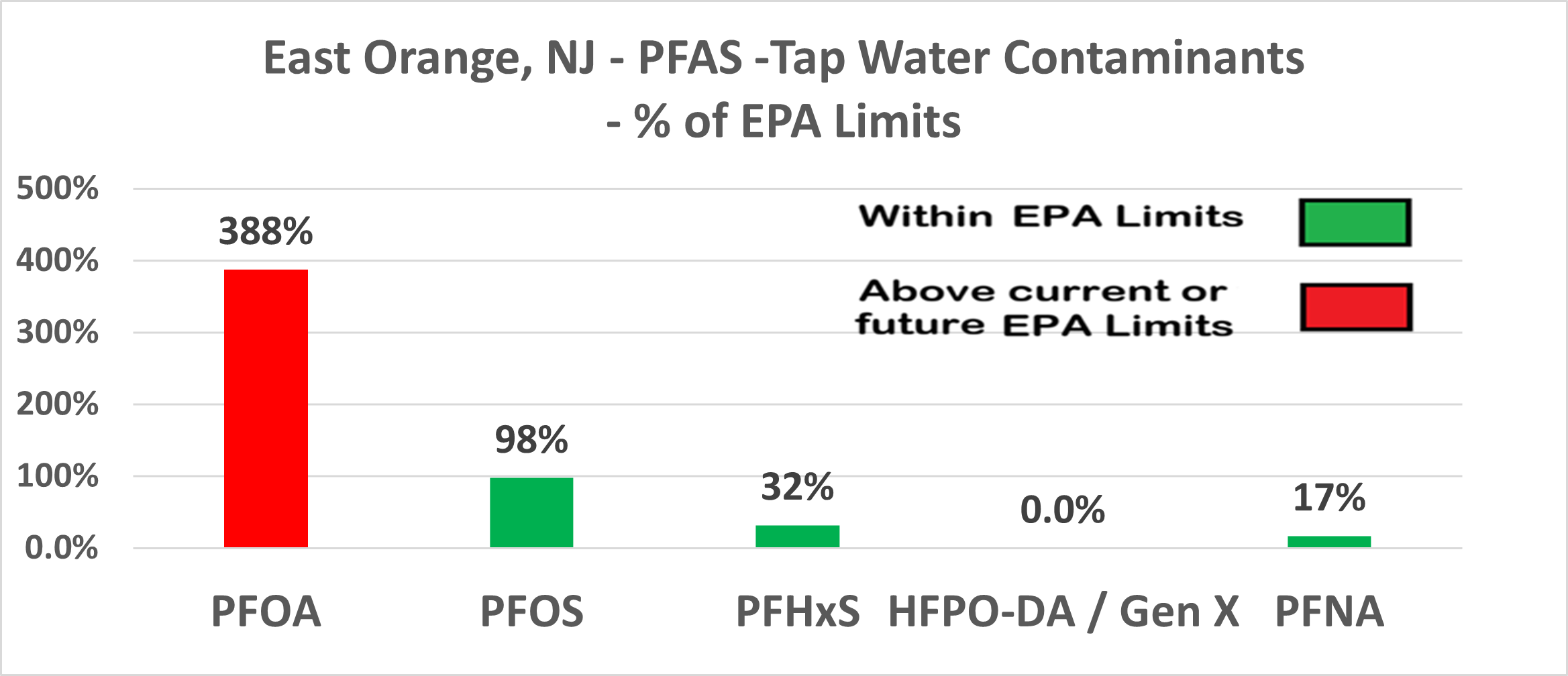
East Orange PFAS levels - PFOA significantly exceeds future EPA health advisory limit
Other Contaminants
No other significant contaminant issues were detected in East Orange's water supply. While disinfection byproducts (TTHM and HAA5), chlorine, manganese, and several other contaminants are present, they remain within EPA acceptable limits.
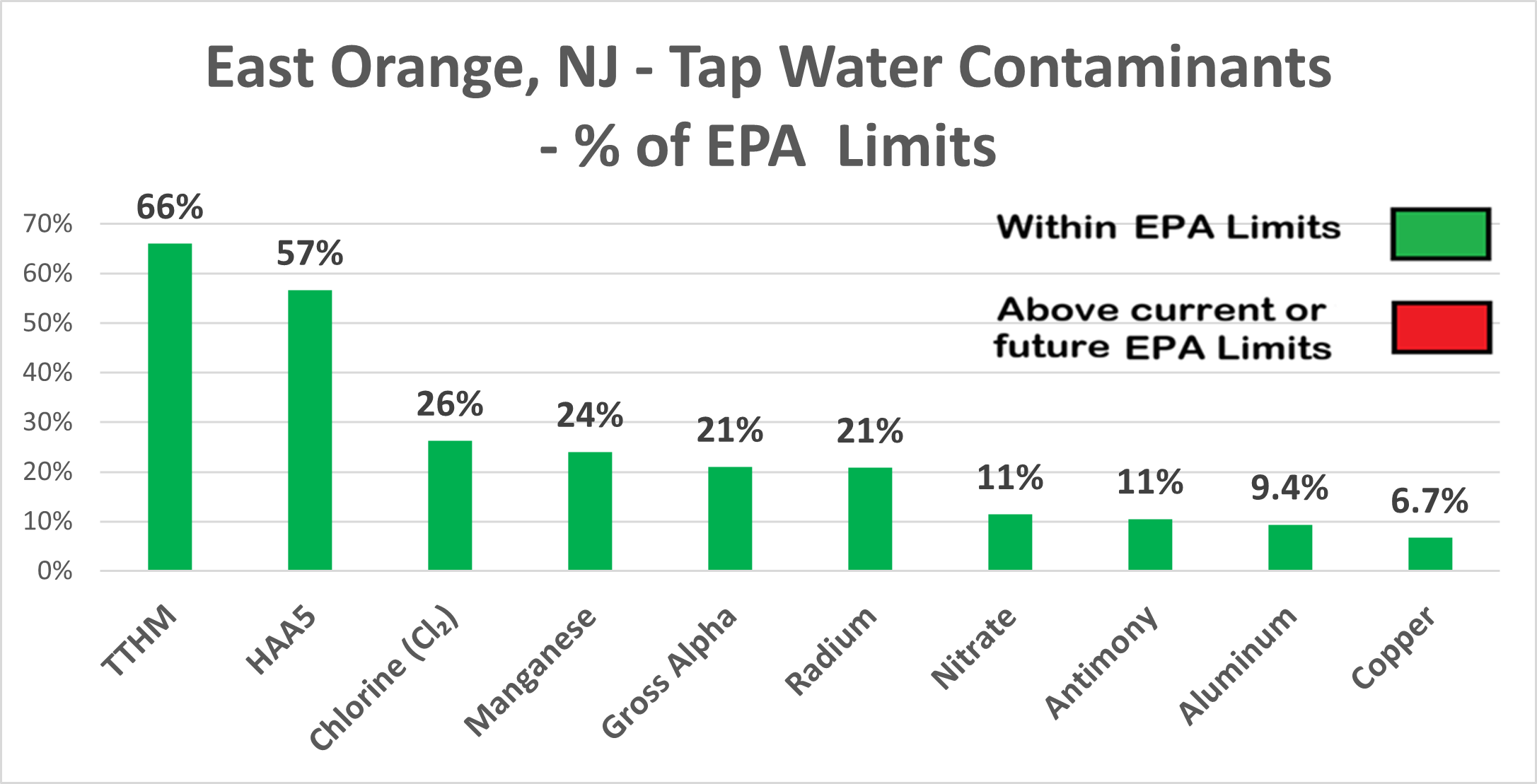
Other contaminants in East Orange - all within EPA safety standards
Notable Findings:
- TTHM (Total Trihalomethanes) at 66% of EPA limit
- HAA5 (Haloacetic Acids) at 57% of EPA limit
- Chlorine at 26% of EPA limit (used for disinfection)
- Manganese at 24% of EPA limit
- Gross Alpha and Radium at 21% of EPA limits
- Nitrate and Antimony at 11% of EPA limits
- All other contaminants at 10% or below of EPA limits
Our Grading System
Like nature's masterpiece, a glass of pristine water is something to behold. Yet, when various contaminants are present, it's a different story. Consider the image of the Mona Lisa on the left and compare it to the image on the right, which contains several key water contaminants overlaid on it.
Important note about fluoride: We consider fluoride separately from other contaminants due to its unique status as an intentionally added substance for dental health benefits. While we note its presence, it does not negatively impact our water quality grades, as it is added by design rather than being an unwanted contaminant.
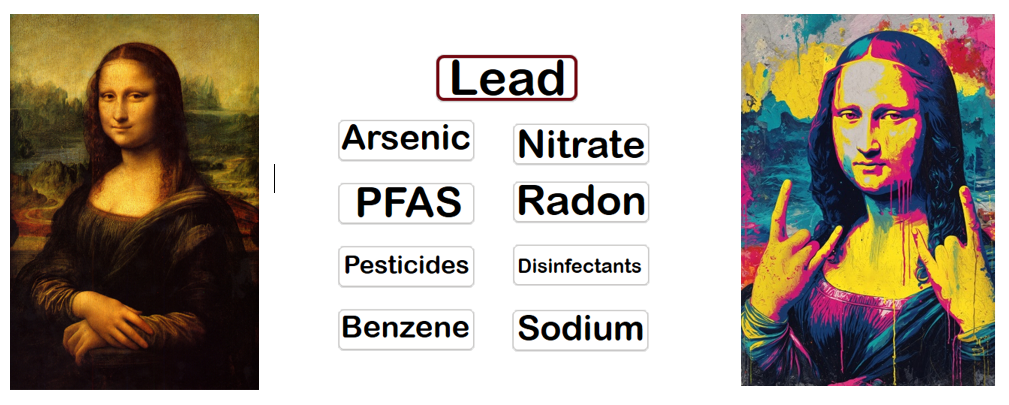
Illustrating how contaminants affect water quality, similar to how alterations affect a masterpiece
How We Grade:
We evaluate water quality based on the toxicity of each contaminant, the level at which it is present, as well as the cumulative impact of all detected contaminants.
How Does East Orange Compare?
The C-, Fair rating is about average for the local area. Nearby Orange, New Jersey with no detectable lead, arsenic or forever chemicals, was the only local municipality to rate excellent.
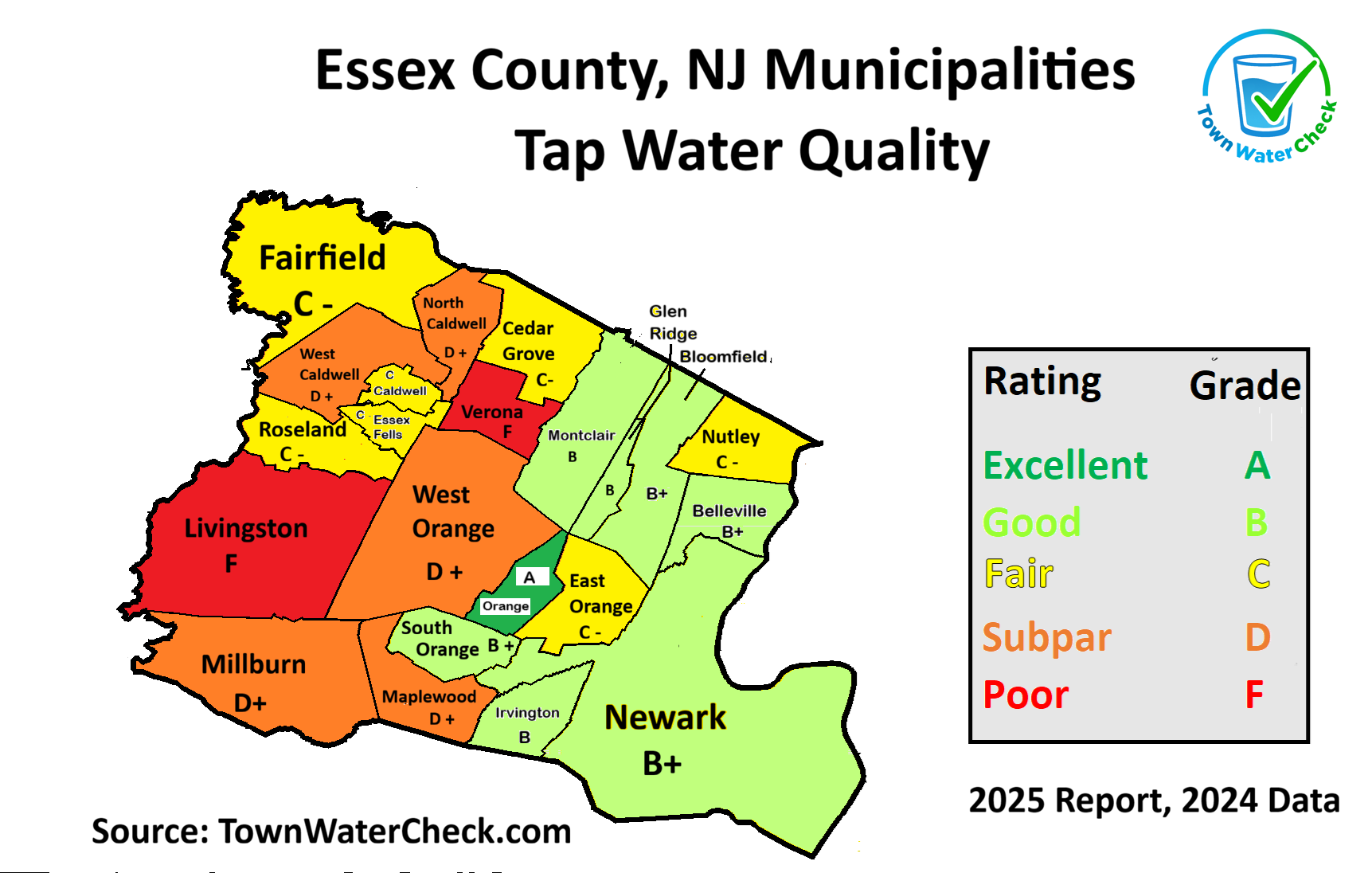
Regional water quality comparison - East Orange and neighboring communities
Better than East Orange:
- Orange (A)
- Montclair (B)
- Irvington (B)
Similar to East Orange:
- Cedar Grove (C-)
- Nutley (C-)
Our Filter Recommendation
Given the levels of PFAS and heavy metals in East Orange tap water, we recommend using a reverse osmosis (RO) type filter with a NSF/ANSI 58 standard. Alternatively, some Carbon Block filters with an NSF/ANSI 53 rating may also be effective.
Just ensure they are certified to remove your particular water contaminants. If you would like to find out more about these filters, please visit: www.townwatercheck.com/water-filter-selection
Note: The Consumer Confidence Report does not indicate active water fluoridation in East Orange.
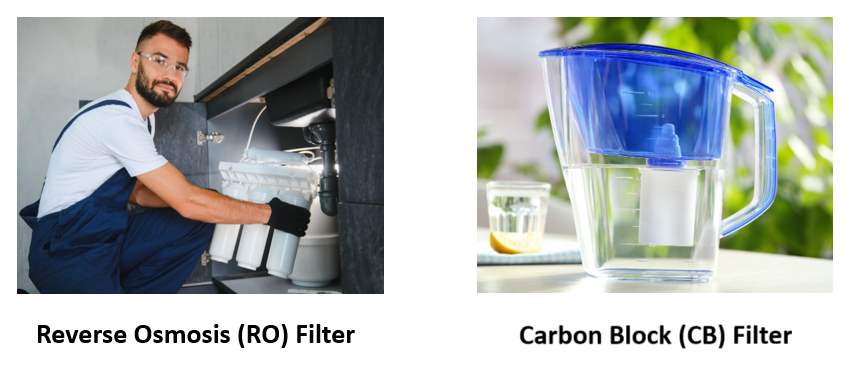
Filter options: Reverse Osmosis (RO) systems and Carbon Block filters

An urban main street with local businesses in East Orange
We hope that our tap water information has proven helpful.
Notes:
- For the latest tap water information, check with your water provider or municipality.
- Relatively recent discoveries that even miniscule PPT (parts per trillion) levels of PFAS are harmful, and the resulting legislation, have created a very challenging situation for water supply companies, since commercial filtration infrastructure cannot be changed overnight.
- The influence of contaminants on health relates to chronic, long-term, not acute or immediate effects. We make no claims, positive or negative, regarding tap water safety.
- Sampled tap water data tends to be more conservative than the average glass of tap water, often citing the 9th worst of 10 samples.
- The information contained in this report may not reflect the views of our advisors.
- Please contact Town Water Check if you feel we have made an error.
- For purposes of consistency, we use EPA limits throughout this report, not state or local limits.
Town Water Check wishes you a healthy and informed life and a cleaner, more beautiful planet.