Other Notable Water Disasters
Various incidents across the United States and internationally
A change in disinfection methods caused lead to leach from pipes into the drinking water. Thousands of homes had water with lead levels exceeding EPA standards, and the problem was initially concealed from the public.
The crisis led to more stringent lead monitoring requirements and highlighted the need for transparency in water quality reporting.
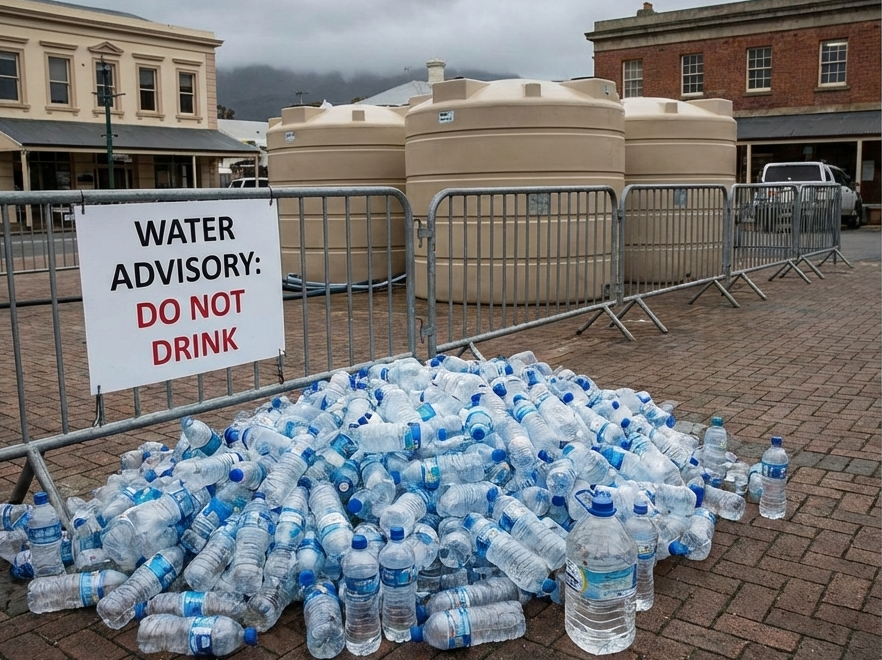
Toxic algal blooms in Lake Erie contaminated Toledo, Ohio's drinking water with microcystin, a liver toxin. A "do not drink" advisory affected over 500,000 people for three days.
The crisis highlighted the impact of agricultural runoff and climate change on water quality and led to improved monitoring for algal toxins.
While in Canada, this case is notable: Heavy rainfall washed cattle manure into a shallow well that supplied Walkerton, Ontario's water system. Inadequate chlorination and falsified water quality reports led to an E. coli O157:H7 outbreak.
Seven people died and over 2,300 became ill. The case led to major reforms in water management across Canada and influenced water safety approaches internationally.
Made famous by the movie "Erin Brockovich," Pacific Gas & Electric used hexavalent chromium as an anti-corrosive in cooling towers at their Hinkley, California facility. The chemical leached into groundwater, contaminating private wells.
The case resulted in a $333 million settlement and raised awareness about industrial contamination of groundwater and corporate accountability.
An ongoing issue across the United States, PFAS (per- and polyfluoroalkyl substances) have contaminated drinking water in numerous communities. These "forever chemicals" have been linked to cancer, immune system damage, and other health effects.
Notable cases include contamination in Parkersburg, WV (DuPont), Hoosick Falls, NY, and communities near military bases. The EPA has recently proposed strict new limits on PFAS in drinking water.
Decades of deferred maintenance and underinvestment culminated in a complete failure of Jackson's main water treatment facility in August 2022, leaving 150,000 residents without safe drinking water for weeks.
The crisis highlighted infrastructure inequality and the challenges faced by underfunded water systems in economically disadvantaged communities.